
Genoa Township City Directory Collections
Genoa Township does not have a separate incorporated-city directory series. Its historical address and name clues sit in Delaware County collections, where a county directory, street guide, city guide, or rural-route volume may reach the township. Search under Genoa Township, Delaware County, and the relevant period. A Westerville or Galena mailing label can be useful as an additional term, but it does not replace the township and county jurisdiction.
| Collection | Years | Where held | Access |
|---|---|---|---|
| R. L. Polk & Co. directory | 1893-1894 | Ohio Memory, item held by the Historical Society | Free digitized item |
| George A. Baker directory | 1905-1906 | Ohio Memory | Free digitized images |
| Historical city and county directories | Varied historic years | Delaware County District Library Local History Room | In-library room material |
| City and Rural Route directories | Varied historic years | Cryder Research Library | Appointment access |
The listed digital volumes are known runs, not proof of a continuous annual series. A missing year may mean the collection lacks that volume, the township was recorded under another locality, or a relevant name appeared only in a county or rural-route section. Cite an image or page number whenever a result becomes part of a family-history note.
Genoa Township Directory Jurisdiction
Genoa Township is in Delaware County, Ohio, rather than the Village of Genoa in Ottawa County. That distinction matters before opening a historical directory or requesting library help. County archives, maps, and historic directories often use place labels that do not match a modern mailing address, and a name-only search can pull the wrong Genoa.
The official Township history supplies the local setting for historical directory research: the first deeds date to 1800, the township organized in 1816, Big Walnut Creek supported early settlement, and the Genoa Trail rail connection carried passengers from 1873 to 1950. These facts help explain why an address may be indexed by an older post office, rail-era place reference, or rural route.
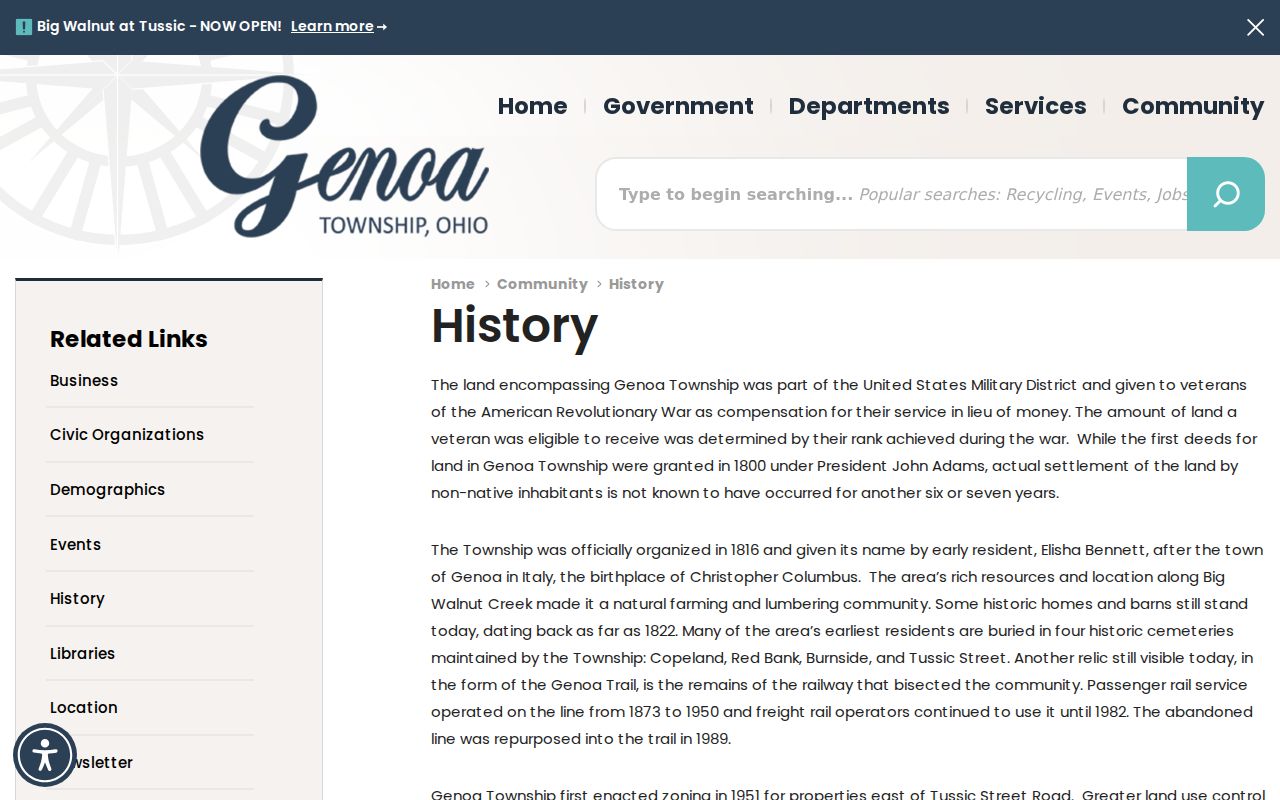
Use the history page to date the geographic setting, then rely on a directory image, map, or legal description for the specific address evidence. Local history is a useful frame, not a substitute for the record itself.
Genoa Township Directory Volumes
The digitized 1893-94 R. L. Polk & Co. directory is a 98-page item with a city guide, alphabetical directory, classified business directory, and county resident directory containing home addresses and post-office information. It is especially useful when a Genoa Township name may have appeared in a county rather than a city section. Record the collection title, the page or image, and the date before comparing it with another source.
Its county-resident and post-office features can help distinguish a county clue from a city-only listing, but they still describe the period of publication. They do not establish a current address.
The 1905-06 George A. Baker directory has 135 digitized images and includes city guide, individual directory, classified directory, street and householder guide, and county-directory sections. That street-order component is a useful second route after a name entry has produced a historical address. It also makes the volume more useful than a simple alphabetical list.
Genoa Township Directory Research Room
The Delaware County District Library Local History & Genealogy service is at 84 E. Winter Street in Delaware, telephone 740-362-3861. Its Local History Room keeps room material for in-library use, including historical city and county directories, cemetery and tombstone records, atlases, church histories, census microfilm, the Delaware Gazette from 1821 to the present, yearbooks, and genealogy databases.
The Local History Room is the appropriate in-person fallback when an online Genoa Township directory search ends with a partial name, an old road label, or a gap between digitized volumes. Its surrounding cemetery and newspaper resources can test a dated directory lead without turning a brief entry into a conclusion about the whole family. Use the directory date first, then look for an independent record from the same period.
Bring a focused question to the desk: the spelling used in the volume, the likely township or post office, the date range, and the kind of evidence needed. A request for one edition, map, obituary, or newspaper window is easier to check than a request for every mention of a surname. If the first volume does not contain the name, record the negative search with its date and section before trying a different locality label.
Reading a Genoa Township City Directory Entry
Read the key pages before reading a name. The two digitized Ohio Memory volumes were inspected as collection records, not transcribed line by line, so the safest inventory is limited to their documented structure. An entry may supply a personal or organization name, historic home or business address, post office, trade or classification, business location, and in some cases a household-status notation. The Baker volume adds a street and householder section.
| Name | The personal or organization name printed in that volume. |
|---|---|
| Historic address | A home or business address as used when the directory was published. |
| Post office | A mailing-place clue that can differ from a present address label. |
| Trade or classification | A category that helps separate similarly named entries. |
| Street section | In the Baker volume, a street and householder route for address-first searching. |
- Criss-cross directory
- A directory arranged in street order, often useful after an alphabetical name result.
- Householder index
- An address-oriented listing that identifies the listed household contact for that edition.
- Abbreviation key
- The volume's explanation of shortened terms and marks; consult it before interpreting an entry.
Do not expand an abbreviation by guesswork. Photograph or note the key and citation with the entry. A single historic address can also need a map or legal-description check before it is associated with a present street.
Genoa Township Directory Research Desks
The Delaware County Genealogical Society focuses on Delaware and adjoining counties. Its posted research service is $10 per hour plus copies and postage, while a Bouic Index surname search costs $5 and reaches more than 300 sources. Send a bounded request: the name variants, township, period, and record type needed. That is more useful than a broad request for every possible listing.
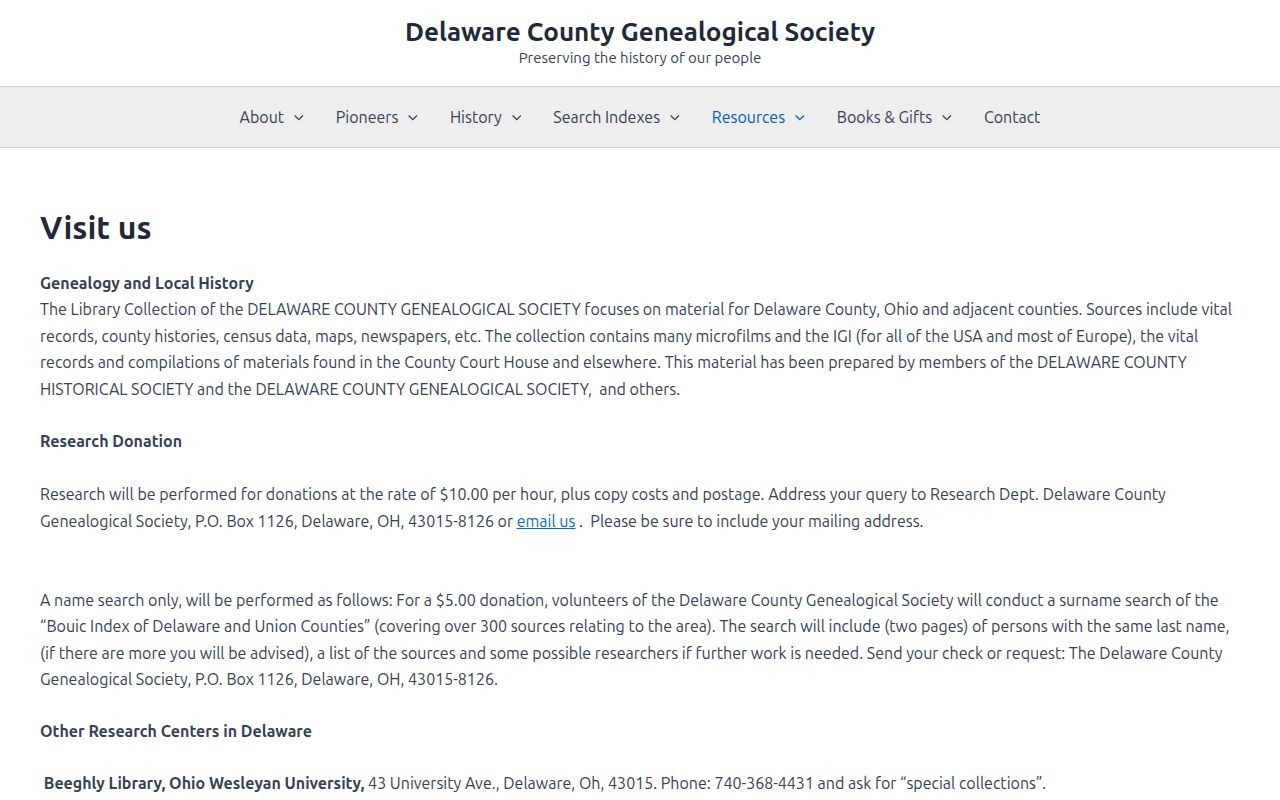
Its research service can help locate a source, but the original volume or image remains the citation for any address claim. Preserve the year and page reference in the request.
The Cryder Research Library, 157 E. William Street, holds county histories, obituaries, maps and atlases, City and Rural Route directories, yearbooks, and Mendenhall property transfers for 1800-1891. Access is by appointment at 740-369-3831, extension 2. Its property-transfer material can bridge an early directory clue to a deed-era research question.
Genoa Township Directory Map Checks
Use a historical map to test place context, not to force an old directory address onto a current parcel. The Genealogical Society's 1866 Genoa Township map and the 1875 Everts atlas can add township, road, and local-place context. The atlas includes township maps and Township Personals and Directories.
The historical-map source gives a useful geographic check for a Genoa Township historical-directory address before it is connected to a recorded parcel.
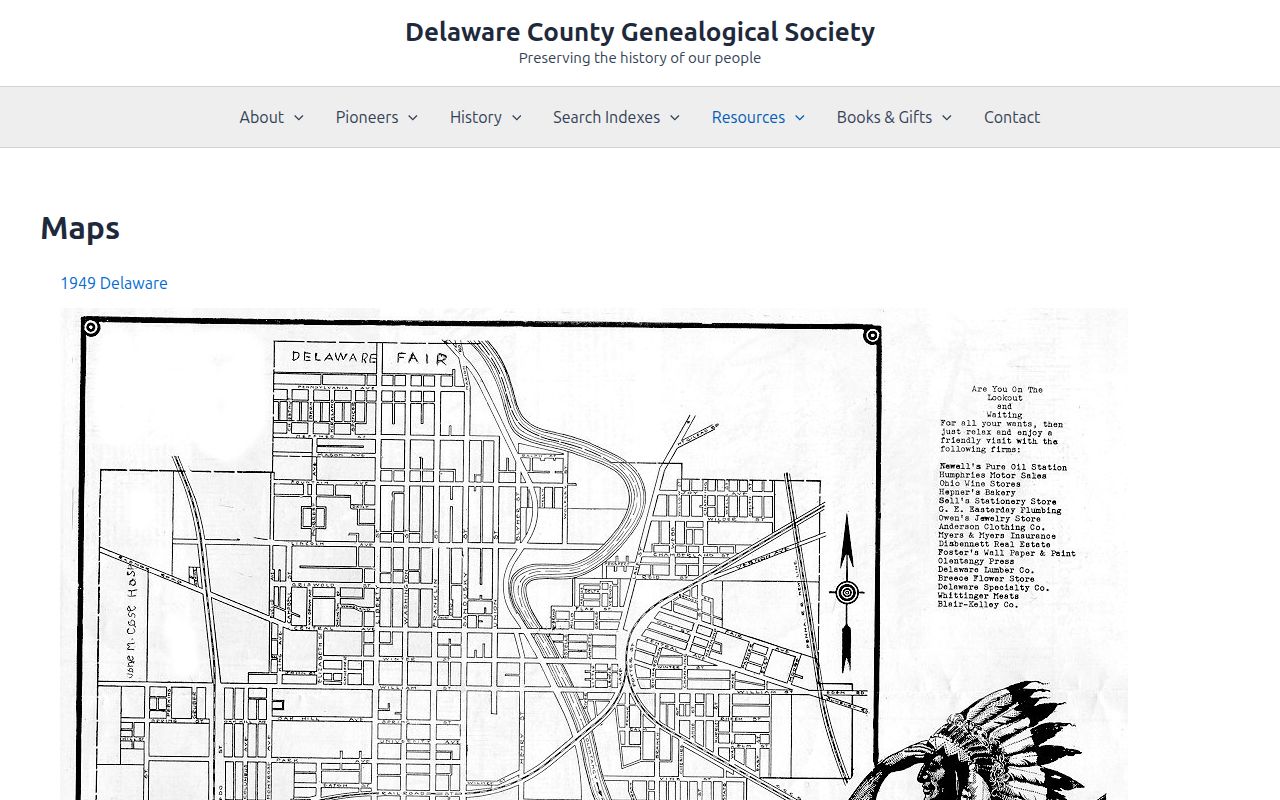
Match the directory date to the map date, then compare street name, post office, lot or section clues, and later legal descriptions. Road changes, the reservoir, and later development can make a visual match misleading without that documentary bridge.
Genoa Township Directory Timeline
Directory reading is easier when the physical history stays beside the citation. The following local sequence is supported by the Township history. It explains why county directories, older maps, and cemetery material may preserve a place reference that differs from a current mailing label.
- 1800: The first deeds in the area date to this year.
- 1816: Genoa Township organized under Elisha Bennett.
- 1873-1950: The Genoa Trail carried passenger service; freight continued through 1982.
- 1953-1955: Hoover Reservoir was built, flooding a stream valley and changing the landscape.
- 1989: Trail development followed the rail era.
Story note: Big Walnut Creek, the former rail corridor, and Hoover Reservoir are record-finding clues because they can mark older places, routes, and land patterns. They are not evidence that an individual was listed at an address.
Following Families Through Genoa Township Directories
Trace a household only through dated records. Start with the earliest known directory entry, then follow later accessible editions while writing down exactly what changed: spelling, street, post office, classification, or a missing appearance. Pair each result with census microfilm, newspaper, cemetery, map, or recorded-document evidence from a compatible period. A disappearance can reflect a move, a death, a different place label, or an indexing gap.
- Find the first known entry and record the collection, year, image or page, and every printed address detail.
- Search the next available directory year for the same spelling and reasonable variants.
- Use a street or householder section when the volume has one, but retain the same printed date.
- Pair the result with the closest census, newspaper, map, cemetery, or deed evidence rather than assuming identity from a name.
- When the online run ends, ask the library or research desk for the narrow missing year or collection.
Note: A historical directory is strongest as a cited, time-specific lead. It is not a current Genoa Township resident list.
Genoa Township Directory Place History
The official Township cemetery page documents Burnside, Copeland, Red Bank, and Tussic Street as historic sites. Cemetery records can offer a place and time clue after a directory search, particularly for early settlement families and the Hoover Reservoir period. They should not be turned into a fresh person roster.
The Township cemetery source supplies place history that can complement a Genoa Township directory citation.
Use a cemetery clue with the directory year, map, or local paper to confirm timing. It cannot establish a current address or replace the original directory citation.